



Inflation Early Warning System / Will Your Monthly Budget Change? What India’s Shift from WPI to PPI Means for Everyday Consumers
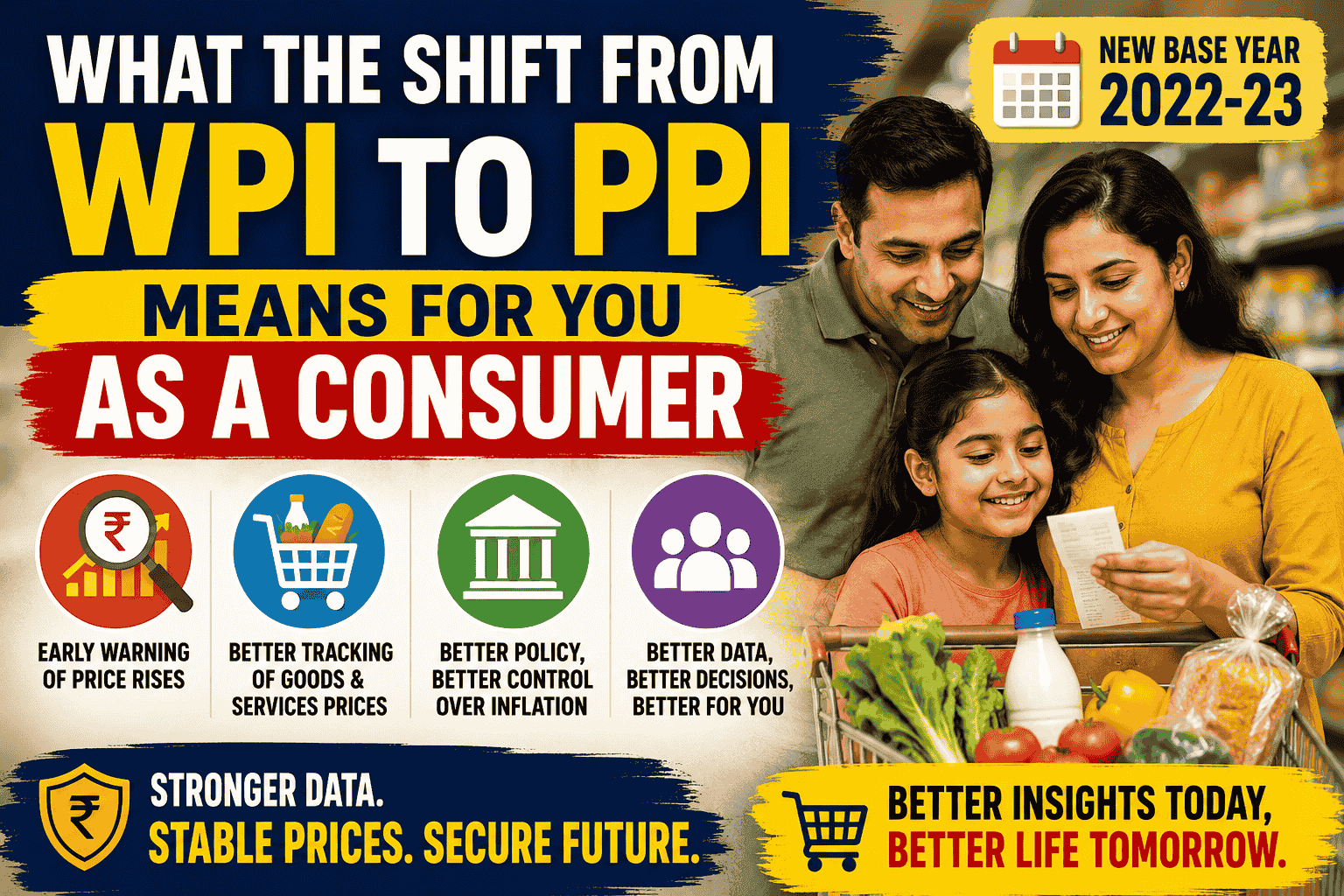
Key Points
* New Producer Price Indices will track both input and output costs, offering earlier signals of future price rises. * Consumers may not see immediate price changes, but policymakers will get better tools to manage inflation and cost pressures.
Bhubaneswar: At first glance, the transition from the Wholesale Price Index (WPI) to Producer Price Indices (PPIs) may appear to be a technical statistical change. However, it has important implications for ordinary consumers because it can improve how policymakers track inflation and respond to rising prices.
1. Better Early Warning of Price Rises
One of the biggest advantages of PPIs is that they track both the prices producers receive for their products and the costs they incur for raw materials and inputs.
For example, if the cost of steel, cement, edible oil, or fuel starts rising sharply, the Input PPI will capture it early. Policymakers can then assess whether these higher costs are likely to be passed on to consumers through more expensive cars, houses, packaged foods, or transportation services.

📱 Get Argus News App
✨In simple terms, PPIs act like an "inflation early-warning system."
2. More Accurate Inflation Measurement
The existing WPI mainly focuses on goods and largely ignores services, even though services account for more than half of India's economy and a significant portion of household spending.
The new Service PPI will track price movements in sectors such as:
- Banking
- Insurance
- Telecommunications
- Air travel
- Rail transport
- Pension fund management
- Securities transactions
This gives policymakers a better understanding of cost pressures in sectors that directly affect consumers' daily lives.
3. Better Policy Decisions
When governments and central banks have better data, they can design more effective policies.
For instance:
- If food inflation is being driven by rising farm-gate prices, targeted interventions can be made.
- If manufacturing costs are rising because of imported raw materials, trade or tariff measures may be considered.
- If service-sector costs are increasing rapidly, regulators can identify the source of the pressure.
More accurate data generally leads to better economic decision-making.
4. Potentially Better Control Over Inflation
Consumers often feel inflation only when prices at shops, markets, or service providers rise.
By tracking inflation throughout the production chain, authorities can identify price pressures before they fully reach consumers. While PPIs do not directly reduce inflation, they improve the government's ability to monitor and respond to emerging price shocks.
5. Reflecting the Modern Economy
The revised WPI basket now includes renewable energy sources such as solar and wind power, along with a larger number of products than before.
This means inflation measurements will better reflect today's economy rather than one based on consumption and production patterns from more than a decade ago.
Will Consumers See Immediate Changes in Prices?
No. The introduction of PPIs will not directly make goods cheaper or more expensive. Consumers will not notice any immediate change in the prices they pay for groceries, fuel, electricity, or services.
The impact is indirect: better inflation data can help governments, regulators, and businesses make more informed decisions, which may contribute to improved inflation management over time.
The Bottom Line
For consumers, the shift from WPI to PPI is similar to upgrading from an old map to a real-time navigation system. It does not change the road itself, but it gives policymakers a much clearer view of where inflation pressures are building, allowing them to respond more effectively before higher costs reach households.
Related Topics
Explore more stories