



Petrol Price Hike / Fuel Prices Hiked Again; Petrol Now Rs 108.97 Per Litre In Bhubaneswar
·4 months ago·3 min read
Key Points
Fuel prices hiked again on Monday: petrol up Rs 2.61/litre, diesel up Rs 2.71/litre -- fourth increase in less than two weeks amid surging global crude due to West Asia conflict.
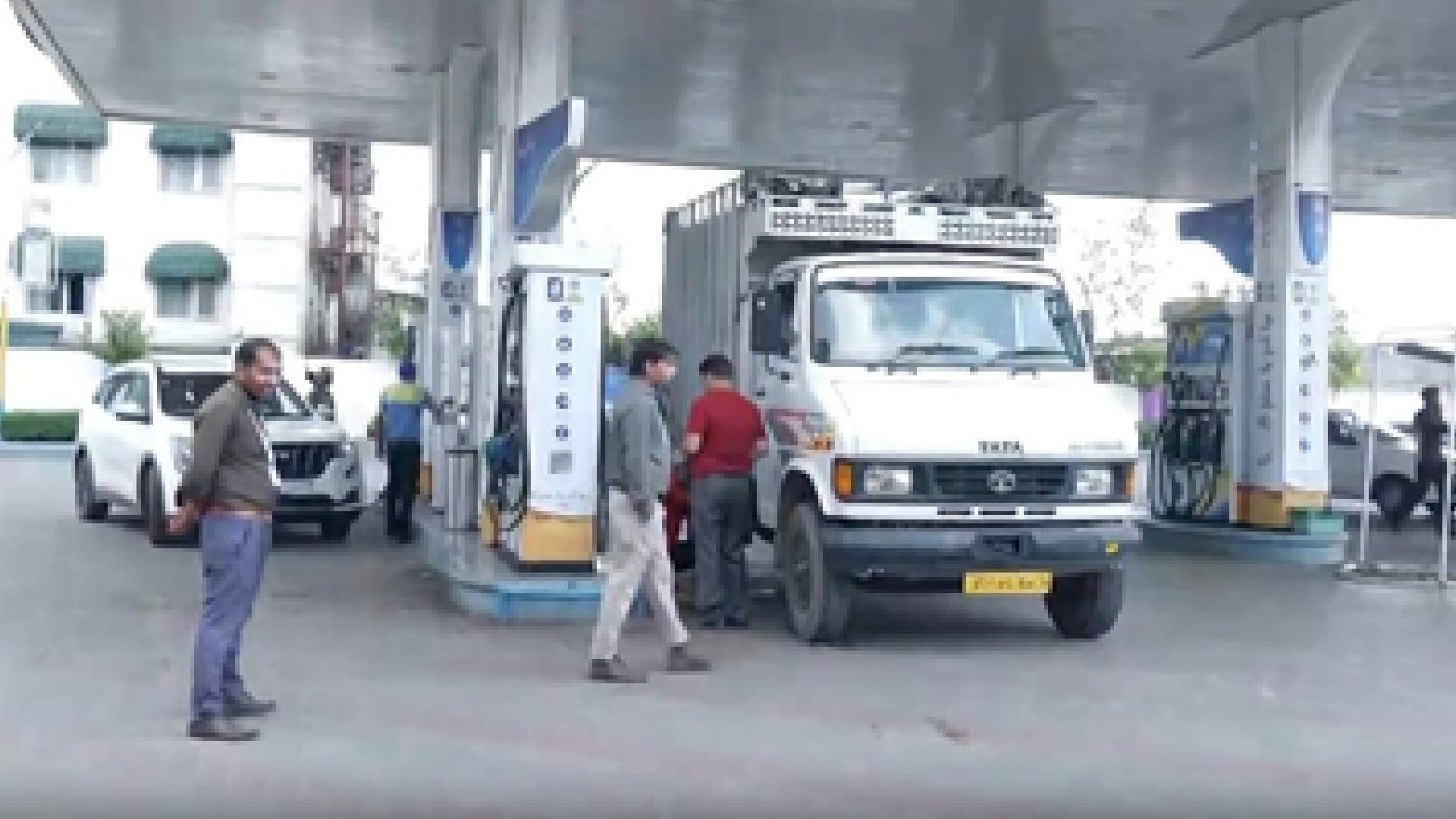
Bhubaneswar, May 25: Fuel prices across India were hiked once again on Monday, marking the fourth increase in less than two weeks as state-run oil marketing companies continued revising retail rates amid surging global crude oil prices linked to the ongoing West Asia conflict.
Petrol prices were increased by Rs 2.61 per litre, while diesel rates went up by Rs 2.71 per litre.
Following the latest revision, petrol in Bhubaneswar rose to Rs 108.97 per litre, while diesel touched Rs 100.67 per litre.
In New Delhi, petrol is now priced at Rs 102.12 per litre and diesel at Rs 95.20 per litre.
Petrol prices were increased by Rs 2.61 per litre, while diesel rates went up by Rs 2.71 per litre.
Following the latest revision, petrol in Bhubaneswar rose to Rs 108.97 per litre, while diesel touched Rs 100.67 per litre.
In New Delhi, petrol is now priced at Rs 102.12 per litre and diesel at Rs 95.20 per litre.

📱 Get Argus News App
✨📰 60 Word News🎬 Argus Podcast📺 Live TV and Breaking News🔔 Free Notification Alerts
Download Free:
Strait Of Hormuz Crisis Behind Crude Surge
The repeated fuel price hikes come amid sharp volatility in international crude oil markets triggered by the ongoing conflict involving the United States and Iran.
The closure concerns surrounding the Strait of Hormuz -- a crucial global oil shipping route -- have significantly pushed up crude prices and increased import costs for countries like India.
Speaking on the situation, ONGC Director (Exploration) Sushma Rawat said crude oil prices have remained highly volatile due to uncertainty surrounding the conflict.
“Whenever there is an announcement of a peace accord, crude prices begin to fall. But when it becomes clear that there is no immediate resolution, prices rise again,” Rawat told ANI.
Oil Companies Losing Nearly Rs 1,000 Crore Daily
Rawat further stated that the government had so far shielded consumers from the full impact of rising global energy prices despite continued volatility.
“The government has given relief to the people for 76 days, during which the price has not increased. The price has increased because the oil marketing companies (OMCs) were taking a hit of almost Rs 1,000 crore a day. How long do you sustain that?” she said.
The repeated fuel price hikes come amid sharp volatility in international crude oil markets triggered by the ongoing conflict involving the United States and Iran.
The closure concerns surrounding the Strait of Hormuz -- a crucial global oil shipping route -- have significantly pushed up crude prices and increased import costs for countries like India.
Speaking on the situation, ONGC Director (Exploration) Sushma Rawat said crude oil prices have remained highly volatile due to uncertainty surrounding the conflict.
“Whenever there is an announcement of a peace accord, crude prices begin to fall. But when it becomes clear that there is no immediate resolution, prices rise again,” Rawat told ANI.
Oil Companies Losing Nearly Rs 1,000 Crore Daily
Rawat further stated that the government had so far shielded consumers from the full impact of rising global energy prices despite continued volatility.
“The government has given relief to the people for 76 days, during which the price has not increased. The price has increased because the oil marketing companies (OMCs) were taking a hit of almost Rs 1,000 crore a day. How long do you sustain that?” she said.
Petrol and diesel prices were last revised on May 23, when petrol rates were increased by Rs 0.87 per litre and diesel by Rs 0.91 per litre.
Global Oil Prices Fall Amid Peace Hopes
Meanwhile, global oil prices witnessed a sharp decline of more than five per cent amid hopes of a possible peace agreement between the US and Iran, despite US President Donald Trump downplaying the possibility of an immediate breakthrough.
North Sea Brent Crude fell 5.1 per cent to USD 98.22 per barrel, while West Texas Intermediate (WTI) crude dropped 5.2 per cent to USD 91.57 per barrel before recovering marginally later in trading.
Inflation Concerns Rise
India had earlier announced a Rs 3 per litre hike in petrol and diesel prices on May 16 after maintaining relative stability in fuel prices since April 2022, except for a Rs 2 reduction ahead of the 2024 Lok Sabha elections.
Also Read: IOC Assures No Fuel Shortage, Supply Stable Nationwide
Analysts warned that repeated increases in fuel prices could significantly raise transportation and logistics costs, eventually leading to higher prices of food items and essential commodities.
Government officials had earlier stated that fuel price revisions were necessary to manage rising import expenses and ensure stability in domestic fuel supplies amid continuing geopolitical tensions and volatility in global energy markets.
Global Oil Prices Fall Amid Peace Hopes
Meanwhile, global oil prices witnessed a sharp decline of more than five per cent amid hopes of a possible peace agreement between the US and Iran, despite US President Donald Trump downplaying the possibility of an immediate breakthrough.
North Sea Brent Crude fell 5.1 per cent to USD 98.22 per barrel, while West Texas Intermediate (WTI) crude dropped 5.2 per cent to USD 91.57 per barrel before recovering marginally later in trading.
Inflation Concerns Rise
India had earlier announced a Rs 3 per litre hike in petrol and diesel prices on May 16 after maintaining relative stability in fuel prices since April 2022, except for a Rs 2 reduction ahead of the 2024 Lok Sabha elections.
Also Read: IOC Assures No Fuel Shortage, Supply Stable Nationwide
Analysts warned that repeated increases in fuel prices could significantly raise transportation and logistics costs, eventually leading to higher prices of food items and essential commodities.
Government officials had earlier stated that fuel price revisions were necessary to manage rising import expenses and ensure stability in domestic fuel supplies amid continuing geopolitical tensions and volatility in global energy markets.
Related Topics
Explore more stories