



Trade Deal / From Premium British Cars to Scotch Whiskey: Find out What Gets Cheaper as India-UK Trade Pact Kicks In
Key Points
India-UK trade pact grants Indian exporters duty-free access to the UK market, boosts services, lowers tariffs on British goods, and is expected to double bilateral trade while creating jobs and investment opportunities.
New Delhi, Jul 15: The India-UK Comprehensive Economic and Trade Agreement (CETA) officially came into force on Wednesday, marking a landmark moment in bilateral relations.
The deal opens one of the world’s largest consumer markets to Indian exporters while simultaneously making premium British products more affordable for Indian buyers.
Trade experts believe the agreement will deepen investment ties, create jobs, and provide a significant boost to India’s manufacturing and services sectors.
Cheaper Imports for Indian Consumers

📱 Get Argus News App
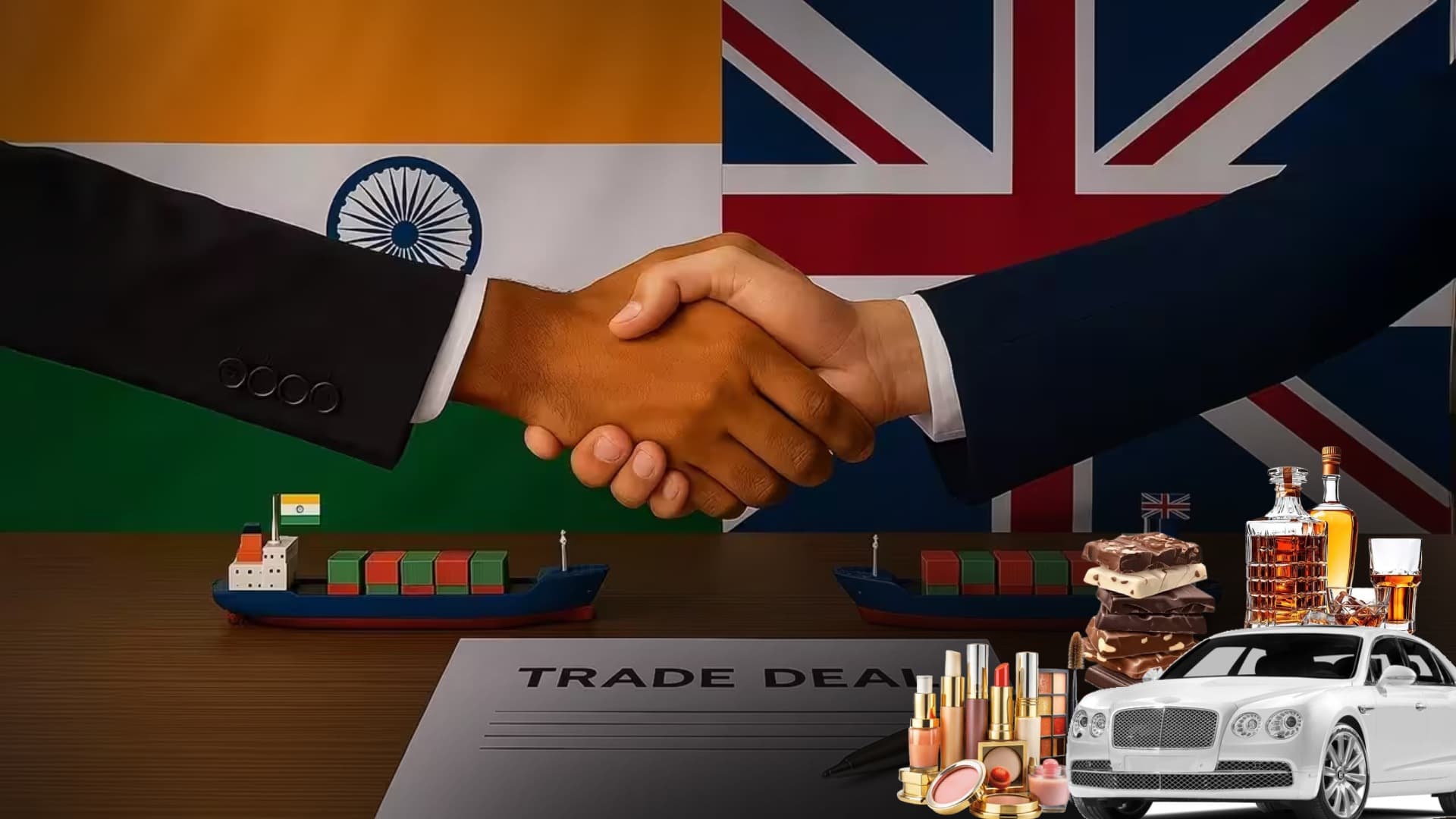
✨For Indian households, the most visible impact will be gradual price reductions on imported British goods. Scotch whisky, gin, premium cars, luxury motorcycles, cosmetics, chocolates, biscuits, and select food products are expected to become more competitively priced as tariffs are reduced in phases.
Also read: India’s Forex Reserves Rise $7.26 Billion to $674.193 Billion
Import duties on British-made vehicles, which previously reached up to 110 per cent, will fall progressively under a quota system. Similarly, tariffs on Scotch whisky will decline step by step, ensuring affordability without destabilizing domestic industries.
Exporters Gain Unprecedented Access
The real game-changer lies in exports. Nearly 99 per cent of Indian goods exported to the UK will now enjoy zero-duty access, covering almost the entire value of merchandise trade. This makes Indian products more competitive against rivals from Europe, China, and other regions.
Beneficiaries include labour-intensive sectors employing millions of Indians: textiles and garments, leather and footwear, gems and jewellery, marine products, engineering goods and auto components, processed food and chemicals, as well as pharmaceuticals and agricultural products.
Industry leaders expect tariff elimination to improve profit margins, encourage higher production, and generate new employment across manufacturing clusters.
Services Sector Boost
The agreement is equally significant for India’s services industry. Covering 137 service sub-sectors, it provides easier market access and regulatory certainty for Indian IT firms, consulting companies, engineers, architects, accountants, healthcare professionals, and education providers.
A key feature is the Double Contribution Convention (DCC), which exempts Indian professionals temporarily working in the UK from paying social security contributions in both countries for assignments up to five years. This reduces costs for employees and employers, enhancing competitiveness abroad.
Safeguards for Domestic Industry
While luxury imports have grabbed headlines, the government has ensured safeguards to protect domestic manufacturers and India’s growing EV ecosystem.
Annual import quotas and eligibility conditions will regulate the inflow of British vehicles and other high-value goods, balancing consumer benefits with industrial protection.
Strategic Significance
Beyond cheaper imports, the agreement represents a strategic shift. The UK, the world’s sixth-largest economy, offers Indian manufacturers access to a high-income market at a time when global trade faces geopolitical uncertainty.
The pact is expected to encourage British investment in India across manufacturing, financial services, renewable energy, education, and technology.
Industry body ASSOCHAM estimates bilateral trade could nearly double to $120 billion by 2030, driven by stronger merchandise exports, services trade, and investment flows.
Prime Minister Narendra Modi hailed the agreement as a “historic milestone,” emphasizing its role in creating opportunities for farmers, workers, MSMEs, startups, and innovators while contributing to the vision of Viksit Bharat 2047.
Gradual but Transformative Impact
Consumers may not see overnight price cuts, but the long-term impact will be transformative. Luxury British products will become more affordable, while Indian exporters gain unprecedented access to a lucrative market. The agreement promises stronger exports, rising manufacturing activity, new jobs, and increased foreign investment.
For India, CETA is more than just another trade pact — it is
a strategic leap toward deeper integration with advanced global markets,
positioning Indian businesses to thrive in one of the world’s most valuable
consumer economies.
Related Topics
Explore more stories