



Viksit Bharat / PM Modi Unveils Vikram-I Rocket, Inaugurates Skyroot's Infinity Campus
·10 months ago·3 min read
Key Points
- PM Narendra Modi unveiled Skyroot Aerospace’s first orbital rocket, Vikram-I, and inaugurated the startup’s new Infinity Campus.
- The Prime Minister said India is witnessing unprecedented opportunities in the space sector due to major reforms enabling private innovation.
- Skyroot’s Infinity Campus will support end-to-end rocket development with a capacity to build one orbital rocket every month.
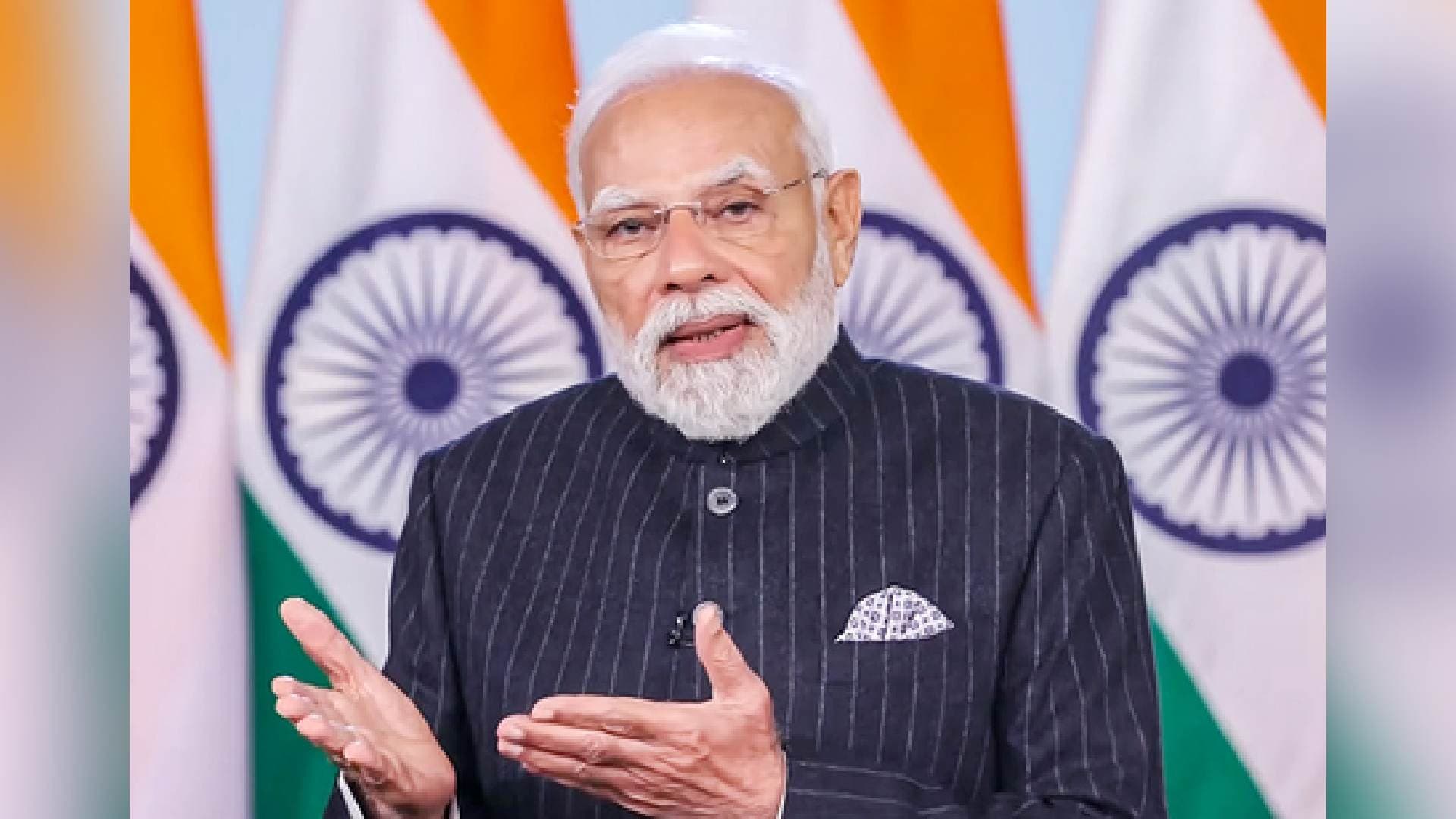
New Delhi, Nov 27: Prime Minister Narendra Modi inaugurated space startup Skyroot Aerospace's Infinity Campus and unveiled its first orbital rocket, Vikram-I, during a virtual event on Thursday, stating that India is witnessing unprecedented opportunities in the space sector.
“Today, the private sector is taking a big leap in India's space ecosystem. Skyroot's Infinity Campus is a reflection of India's new thinking, innovation, and youth power,” PM Modi said.
“With credibility, capacity, and value, Indian space talent has established a strong identity across the world,” he added.
The Prime Minister noted that the country’s space journey began “with extremely limited resources. But our aspirations were never limited.”
“Today, the private sector is taking a big leap in India's space ecosystem. Skyroot's Infinity Campus is a reflection of India's new thinking, innovation, and youth power,” PM Modi said.
“With credibility, capacity, and value, Indian space talent has established a strong identity across the world,” he added.
The Prime Minister noted that the country’s space journey began “with extremely limited resources. But our aspirations were never limited.”

📱 Get Argus News App
✨📰 60 Word News🎬 Argus Podcast📺 Live TV and Breaking News🔔 Free Notification Alerts
Download Free:
Also Read: Turn Off This One Google Setting Immediately to Save Your Privacy And Battery
He noted that from a rocket part transported on a bicycle, today, India has earned its place as the creator of one of the world’s most reliable launch vehicles. The country "has proved that the altitude of our dreams is decided by resolve, not resources," PM Modi said.
He emphasised that the country has a capability in the space sector that only a few countries in the world possess.
“We have expert engineers, a high-quality manufacturing ecosystem, world-class launch sites, and a mindset that encourages innovation,” PM Modi said.
He also credited the success to the historic reforms undertaken in India’s space sector in the last decade.
“The Government has opened the sector for private innovation, enabling startups and industry to work closely with our scientific ecosystem. Over the past six to seven years, India has transformed its space sector into an open, cooperative, and innovation-driven domain. This progress is clearly reflected in today’s programme,” PM Modi said.
He noted that from a rocket part transported on a bicycle, today, India has earned its place as the creator of one of the world’s most reliable launch vehicles. The country "has proved that the altitude of our dreams is decided by resolve, not resources," PM Modi said.
He emphasised that the country has a capability in the space sector that only a few countries in the world possess.
“We have expert engineers, a high-quality manufacturing ecosystem, world-class launch sites, and a mindset that encourages innovation,” PM Modi said.
He also credited the success to the historic reforms undertaken in India’s space sector in the last decade.
“The Government has opened the sector for private innovation, enabling startups and industry to work closely with our scientific ecosystem. Over the past six to seven years, India has transformed its space sector into an open, cooperative, and innovation-driven domain. This progress is clearly reflected in today’s programme,” PM Modi said.
“For global investors, India’s space sector is rapidly becoming an attractive destination. The demand for small satellites is rising steadily worldwide, and space is now recognised as a strategic asset. In the coming years, the global space economy is set to expand many times over. This presents a significant opportunity for India’s youth,” he added.
Meanwhile, Skyroot’s Infinity Campus is a state-of-the-art facility and will have around 200,000 square feet of workspace for designing, developing, integrating, and testing multiple launch vehicles, with the capacity to build one orbital rocket every month.
The Prime Minister also lauded Skyroot founders Pawan Chandana and Bharath Dhaka, both alumni of the Indian Institutes of Technology and former scientists of ISRO who turned entrepreneurs.
“The young space entrepreneurs are an inspiration for youth in the country,” the Prime Minister said to Chandana and Dhaka.
In November 2022, Skyroot launched its sub-orbital rocket, Vikram-S, becoming the first Indian private company to launch a rocket to space.
(IANS)
Meanwhile, Skyroot’s Infinity Campus is a state-of-the-art facility and will have around 200,000 square feet of workspace for designing, developing, integrating, and testing multiple launch vehicles, with the capacity to build one orbital rocket every month.
The Prime Minister also lauded Skyroot founders Pawan Chandana and Bharath Dhaka, both alumni of the Indian Institutes of Technology and former scientists of ISRO who turned entrepreneurs.
“The young space entrepreneurs are an inspiration for youth in the country,” the Prime Minister said to Chandana and Dhaka.
In November 2022, Skyroot launched its sub-orbital rocket, Vikram-S, becoming the first Indian private company to launch a rocket to space.
(IANS)
Related Topics
Explore more stories