



Aviation / IndiGo Crisis Explained: How India’s Biggest Airline Reached a Breaking Point Overnight
·10 months ago·7 min read
Key Points
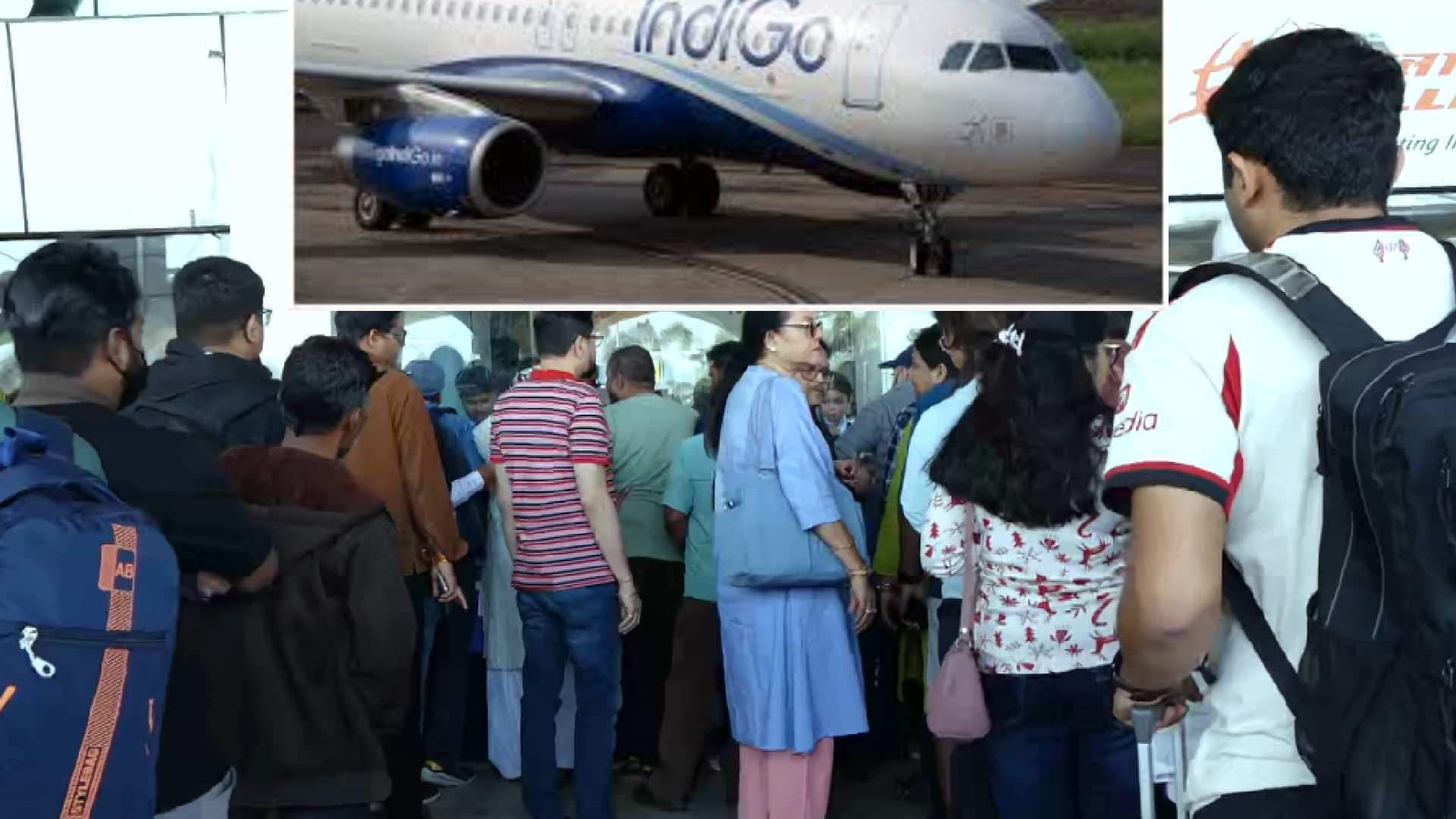
- IndiGo’s December 2025 meltdown -- over 1,000 cancellations in a day -- was triggered by crew shortages after new FDTL rules, technical glitches, congestion and winter fog.
- DGCA rolled back key FDTL restrictions temporarily for IndiGo’s A320 fleet, ordering audits, fortnightly crew reports and strict compliance timelines.
- Pilot unions accuse IndiGo of under-staffing despite two years’ notice, calling the crisis avoidable and warning that safety norms must not be diluted.
Bhubaneswar, Dec 6: IndiGo faced a major operational crisis starting early December 2025, cancelling over 1,000 flights on December 5, including all domestic departures from Delhi and Chennai, due to crew shortages from new Flight Duty Time Limitation (FDTL) rules, technical glitches, weather, and congestion. Punctuality dropped to 35% on December 2, the lowest among major airlines, affecting its 2,300 daily flights. The government suspended FDTL rules, ordered refunds, hotels for stranded passengers, and a high-level probe.
How Are Passengers and Industry Affected?
Thousands missed connections, holidays and important events. Compensation and refunds are mandatory under DGCA rules, but processing takes time.
Other airlines absorbed some passengers, but at much higher fares. The episode highlights the fragility of India’s aviation system as it races toward 300 million domestic passengers per year while infrastructure and crew supply grow more slowly.
DGCA Rollback
The DGCA has temporarily relaxed Phase II FDTL norms for IndiGo’s A320 fleet until 10 February 2026, easing restrictions on night duties between 0000 and 0650 hours and loosening weekly night-landing limits. The regulator has, however, attached strict conditions: IndiGo must submit fortnightly crew-availability reports, present a 30-day plan to achieve full compliance, and undergo continuous safety and rostering audits. Any lapse will trigger an immediate rollback of the concessions.
How Are Passengers and Industry Affected?
Thousands missed connections, holidays and important events. Compensation and refunds are mandatory under DGCA rules, but processing takes time.
Other airlines absorbed some passengers, but at much higher fares. The episode highlights the fragility of India’s aviation system as it races toward 300 million domestic passengers per year while infrastructure and crew supply grow more slowly.
DGCA Rollback
The DGCA has temporarily relaxed Phase II FDTL norms for IndiGo’s A320 fleet until 10 February 2026, easing restrictions on night duties between 0000 and 0650 hours and loosening weekly night-landing limits. The regulator has, however, attached strict conditions: IndiGo must submit fortnightly crew-availability reports, present a 30-day plan to achieve full compliance, and undergo continuous safety and rostering audits. Any lapse will trigger an immediate rollback of the concessions.

📱 Get Argus News App
✨📰 60 Word News🎬 Argus Podcast📺 Live TV and Breaking News🔔 Free Notification Alerts
Download Free:
What Did IndiGo Say?
According to the airline, operations will begin returning to normal from December 8. IndiGo cancelled under 1,000 flights on December 6, down from the previous day’s peak of more than 1,200 cancellations. Full recovery, CEO Pieter Elbers said, is expected between December 10 and 15.
IndiGo's Punctuality Before Crisis
IndiGo was India's leading airline, running about 2,300 flights daily with over 400 aircraft and capturing around 60% of domestic flights. Its on-time performance hit 84.1% in October 2025 but slipped to 67.70% in November as new rules and weather bit in, yet it handled over 8 million passengers monthly with tight schedules and high reliability before the full crisis. The airline thrived on quick turnarounds in a hub-and-spoke model, keeping punctuality above 80% most months without big disruptions.
Why Did So Many Flights Suddenly Disappear?
Several factors collided at once:
⦁ A 6% increase in winter schedules (more flights than last year).
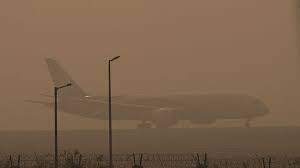
⦁ Dense fog in northern India always reduces airport capacity.
⦁ An urgent Airbus A320 software update was carried out on November 29–30, which disrupted crew planning.
⦁ Minor technical glitches in check-in and reservation systems.
⦁ Most critically, the full effect of the new Flight Duty Time Limitation (FDTL) rules that restrict how many hours pilots can fly and mandate longer rest periods.
What Are FDTL Rules?
FDTL (Flight Duty Time Limitations) caps pilot duty at 10-11 hours daily (down from 13 with extensions), mandates 48-hour weekly rest (up from 36), freezes rosters 15 days early, and demands quarterly fatigue reports.
These rules became mandatory post-January 2024 after issuing notifications in phases -- Phase I July 2025, Phase II November 1 -- to slash fatigue risks, match global standards like ICAO, and boost safety amid 15% traffic growth and pilot gaps.
Definition of “night duty/night hours” extended — night now defined as 12am to 6am (previously 12am–5am).
Cap on night landings per pilot per week — significantly reduced: from as many as six under older norms to a maximum of two landings during operations encroaching on night duty under new rules.
According to the airline, operations will begin returning to normal from December 8. IndiGo cancelled under 1,000 flights on December 6, down from the previous day’s peak of more than 1,200 cancellations. Full recovery, CEO Pieter Elbers said, is expected between December 10 and 15.
IndiGo's Punctuality Before Crisis
IndiGo was India's leading airline, running about 2,300 flights daily with over 400 aircraft and capturing around 60% of domestic flights. Its on-time performance hit 84.1% in October 2025 but slipped to 67.70% in November as new rules and weather bit in, yet it handled over 8 million passengers monthly with tight schedules and high reliability before the full crisis. The airline thrived on quick turnarounds in a hub-and-spoke model, keeping punctuality above 80% most months without big disruptions.
Why Did So Many Flights Suddenly Disappear?
Several factors collided at once:
⦁ A 6% increase in winter schedules (more flights than last year).
⦁ Dense fog in northern India always reduces airport capacity.
⦁ An urgent Airbus A320 software update was carried out on November 29–30, which disrupted crew planning.
⦁ Minor technical glitches in check-in and reservation systems.
⦁ Most critically, the full effect of the new Flight Duty Time Limitation (FDTL) rules that restrict how many hours pilots can fly and mandate longer rest periods.
What Are FDTL Rules?
FDTL (Flight Duty Time Limitations) caps pilot duty at 10-11 hours daily (down from 13 with extensions), mandates 48-hour weekly rest (up from 36), freezes rosters 15 days early, and demands quarterly fatigue reports.
These rules became mandatory post-January 2024 after issuing notifications in phases -- Phase I July 2025, Phase II November 1 -- to slash fatigue risks, match global standards like ICAO, and boost safety amid 15% traffic growth and pilot gaps.
Definition of “night duty/night hours” extended — night now defined as 12am to 6am (previously 12am–5am).
Cap on night landings per pilot per week — significantly reduced: from as many as six under older norms to a maximum of two landings during operations encroaching on night duty under new rules.
No more than two consecutive night-duty shifts permitted, to prevent fatigue accumulation.
Roster stability and crew-planning requirements — airlines required to adjust planning and ensure adequate crew numbers for compliance.
These changes were designed to bring Indian civil aviation standards in line with global safety/fatigue-management norms (similar to frameworks enforced by international regulators).
What It Means in Practice?
These changes require roughly 10–20% more crew (or much smarter scheduling) than the old system allowed. When the stricter night-landing limits kicked in on November 1, right at the start of the foggy winter season, the buffer that many airlines relied on disappeared.
Why Cap on Night Landings?
Night landings from midnight to 6 am disrupt pilots' body clocks, raising fatigue and error risks during the low-visibility fog season. New FDTL rules cut them to just 2 per week from 6, allow only 2 consecutive night duties, and extend night definition to 6am from 5am, as pilots need more rest to stay sharp.
Why Couldn’t IndiGo Just Add More Crews?
India’s aviation sector is expanding rapidly, creating a persistent gap between pilot supply and projected demand.
According to government statements and industry reports, India issued about 1,622 Commercial Pilot Licenses (CPLs) in 2023, and typically produces roughly 1,200–1,500 new CPL-holders per year.
However, not all of them become “airline-ready” immediately, as many still require type-rating, airline-specific training, or additional flying hours.
What Pilot Organisations/Unions Are Saying?
Given the crisis triggered after the new rules came into force, several pilot associations and unions (notably the Federation of Indian Pilots -- FIP, and the Airline Pilots’ Association of India -- ALPA) have publicly criticised IndiGo. Their main points:
“Lean-manpower strategy” despite warning time: FIP says that despite a two-year preparatory window before full FDTL implementation, IndiGo adopted a hiring freeze, signed non-poaching agreements with other airlines, and maintained a “pilot pay freeze.” In other words, the airline did minimal hiring even though the new rules would require more crew.
Given that IndiGo controls a large share of domestic traffic, unions argue that a “failure to plan resources properly” is not just a company problem — it is a systemic risk for all air travellers.
Some in ALPA believe IndiGo may have deliberately under-staffed, then used the resulting disruption to pressure the regulator to relax FDTL norms — effectively using passengers as leverage. ALPA’s president was quoted as alleging the disruptions may have been “artificially created.”
After mass cancellations and chaos, the regulator partially rolled back key FDTL provisions (weekly-rest substitution, night-duty limits) for IndiGo. Pilots’ bodies warn that such concessions “negate the fatigue-management intent” of FDTL rules — risking pilot fatigue, stress and compromised safety.
How IndiGo Emerged as the Main Airline
Founded in 2005 by Rahul Bhatia of InterGlobe Enterprises and Rakesh Gangwal, IndiGo started operations in 2006 with Airbus A320s, reaching 1 million passengers by April 2007 and 10 million by 2009.

It overtook Air India in 2010 at 17.3% share, became India's largest by 2012, went public in 2015, and expanded via massive Airbus orders like 500 A320neos in 2023. A single-fleet, low-cost model with quick turnarounds and bulk deals drove its rise to over 2,700 daily flights by November 2025.
By 2025, massive orders like 500 A320neos and a public listing in 2015 fueled its 60-65% share, making it the top player with over 100 million yearly passengers.
Key elements behind IndiGo’s rise
Also Read: MoCA Acts Against Airfare Hikes, Ensures Fair Pricing Across Routes
What this means for aviation and for passengers?
(A) Safety vs. scheduling tension
The FDTL regulations were introduced precisely to tackle pilot fatigue and improve safety. The fact that safety-driven norms triggered a near-total network collapse suggests that airlines with high-utilisation, low-cost models may face deep structural tension when global safety norms are enforced strictly.
(B) Regulatory trust & safety in limbo
With DGCA now partially relaxing its own fatigue-management rules to relieve the crisis, critics (including pilot bodies) warn that this undercuts safety safeguards and sets a dangerous precedent -- that regulatory leniency can follow operational collapse.
What should be done?
Roster stability and crew-planning requirements — airlines required to adjust planning and ensure adequate crew numbers for compliance.
These changes were designed to bring Indian civil aviation standards in line with global safety/fatigue-management norms (similar to frameworks enforced by international regulators).
What It Means in Practice?
These changes require roughly 10–20% more crew (or much smarter scheduling) than the old system allowed. When the stricter night-landing limits kicked in on November 1, right at the start of the foggy winter season, the buffer that many airlines relied on disappeared.
Why Cap on Night Landings?
Night landings from midnight to 6 am disrupt pilots' body clocks, raising fatigue and error risks during the low-visibility fog season. New FDTL rules cut them to just 2 per week from 6, allow only 2 consecutive night duties, and extend night definition to 6am from 5am, as pilots need more rest to stay sharp.
Why Couldn’t IndiGo Just Add More Crews?
India’s aviation sector is expanding rapidly, creating a persistent gap between pilot supply and projected demand.
According to government statements and industry reports, India issued about 1,622 Commercial Pilot Licenses (CPLs) in 2023, and typically produces roughly 1,200–1,500 new CPL-holders per year.
However, not all of them become “airline-ready” immediately, as many still require type-rating, airline-specific training, or additional flying hours.
What Pilot Organisations/Unions Are Saying?
Given the crisis triggered after the new rules came into force, several pilot associations and unions (notably the Federation of Indian Pilots -- FIP, and the Airline Pilots’ Association of India -- ALPA) have publicly criticised IndiGo. Their main points:
“Lean-manpower strategy” despite warning time: FIP says that despite a two-year preparatory window before full FDTL implementation, IndiGo adopted a hiring freeze, signed non-poaching agreements with other airlines, and maintained a “pilot pay freeze.” In other words, the airline did minimal hiring even though the new rules would require more crew.
Given that IndiGo controls a large share of domestic traffic, unions argue that a “failure to plan resources properly” is not just a company problem — it is a systemic risk for all air travellers.
Some in ALPA believe IndiGo may have deliberately under-staffed, then used the resulting disruption to pressure the regulator to relax FDTL norms — effectively using passengers as leverage. ALPA’s president was quoted as alleging the disruptions may have been “artificially created.”
After mass cancellations and chaos, the regulator partially rolled back key FDTL provisions (weekly-rest substitution, night-duty limits) for IndiGo. Pilots’ bodies warn that such concessions “negate the fatigue-management intent” of FDTL rules — risking pilot fatigue, stress and compromised safety.
How IndiGo Emerged as the Main Airline
Founded in 2005 by Rahul Bhatia of InterGlobe Enterprises and Rakesh Gangwal, IndiGo started operations in 2006 with Airbus A320s, reaching 1 million passengers by April 2007 and 10 million by 2009.
It overtook Air India in 2010 at 17.3% share, became India's largest by 2012, went public in 2015, and expanded via massive Airbus orders like 500 A320neos in 2023. A single-fleet, low-cost model with quick turnarounds and bulk deals drove its rise to over 2,700 daily flights by November 2025.
By 2025, massive orders like 500 A320neos and a public listing in 2015 fueled its 60-65% share, making it the top player with over 100 million yearly passengers.
Key elements behind IndiGo’s rise
- Aggressive fleet orders and expansion
- Single-aircraft-family strategy
- Low-cost, no-frills model
- High aircraft utilisation & quick turnarounds
- Strong ancillary revenue and cost discipline
- Through baggage fees, add-ons, and priority services
- Fleet growth aligned with rising demand
Also Read: MoCA Acts Against Airfare Hikes, Ensures Fair Pricing Across Routes
What this means for aviation and for passengers?
(A) Safety vs. scheduling tension
The FDTL regulations were introduced precisely to tackle pilot fatigue and improve safety. The fact that safety-driven norms triggered a near-total network collapse suggests that airlines with high-utilisation, low-cost models may face deep structural tension when global safety norms are enforced strictly.
(B) Regulatory trust & safety in limbo
With DGCA now partially relaxing its own fatigue-management rules to relieve the crisis, critics (including pilot bodies) warn that this undercuts safety safeguards and sets a dangerous precedent -- that regulatory leniency can follow operational collapse.
What should be done?
- More pilots overall (and better compensation/training to attract them)
- Conservative scheduling (less night-heavy flying)
- Better roster-planning
- A more diversified airline industry (less dependence on a single dominant carrier)
Related Topics
Explore more stories