



Bangladesh Elections / Yunus Provokes India with ‘Seven Sisters’ Remark in Farewell Speech
Key Points
- Outgoing Bangladesh interim chief Muhammad Yunus reignited controversy in his farewell speech by referring to India’s northeast “Seven Sisters” without mentioning India.
- Yunus highlighted Bangladesh’s ties with China, citing progress on the Teesta River project and a hospital in Nilphamari.
- His remarks, declaring Bangladesh “no longer submissive,” were widely interpreted as a pointed message to India.
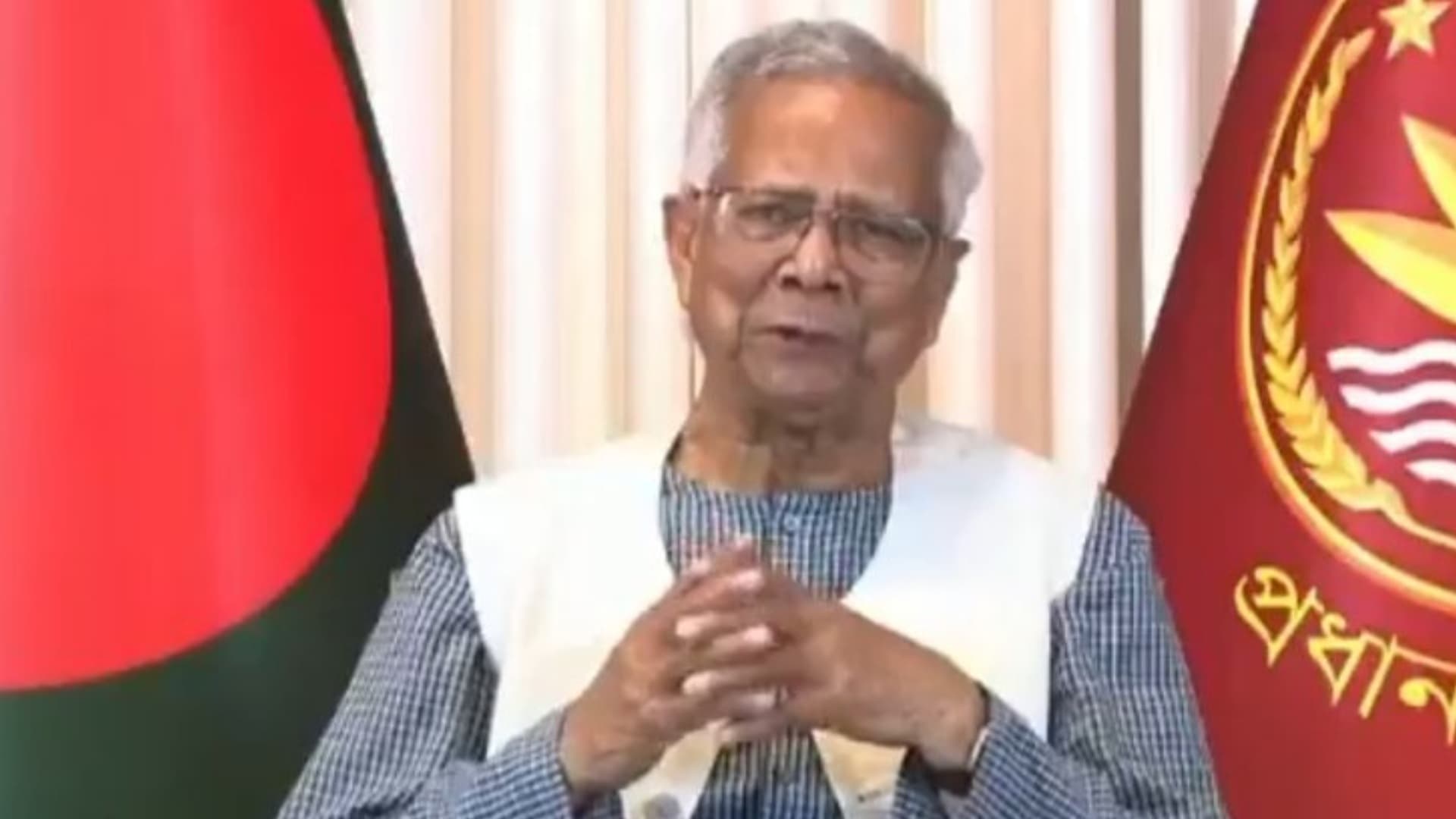
New Delhi, Feb 17: Outgoing Bangladesh interim chief Muhammad Yunus once again courted controversy, and this time in his farewell speech.
The 25-minute speech laced with nationalistic rhetoric.
Yunus revisited the sensitive issue of the northeast region - a recurring
flashpoint during his 18-month tenure.
He argued that Bangladesh’s “open sea” could unlock vast
economic opportunities for the “Seven Sisters” - referring to the northeastern
Indian states of Arunachal Pradesh, Assam, Manipur, Meghalaya, Mizoram,
Nagaland, and Tripura, positioning the country as a gateway to growth for the
region.
Also read: Bangladesh Invites PM Modi to Swearing-In Ceremony of New PM Tarique Rahman

📱 Get Argus News App
✨“Bangladesh can provide huge potential for economic prosperity for the seven sister states, Nepal and Bhutan. Our open seas are not just borders, they are gateways to the global economy,” said Yunus in his farewell speech.
The reference of ‘Seven Sisters’ is likely to infuriate New Delhi, and mostly so because of the fact that he didn’t mention India. Yunus had first raised the issue during his visit to China last year without mentioning India. The omission appeared as if he is considering the India’s “landlocked” northeast region as a separate entity.
India has consistently resisted foreign interference on its territories. Despite that, Yunus, whose tenure fuelled anti-India sentiment in Bangladesh, continues his provocations in an attempt to poke India’s northeast region positioning Bangladesh as an economic gateway.
Highlighting Bangladesh’s ties with China, Yunus said: “We have also deepened cooperation with China. Significant progress has been made on the Teesta River project and a 1,000-bed international hospital in Nilphamari,”
In January, the Yunus administration permitted the Chinese
envoy and officials to visit a sensitive project site, disregarding India’s
concerns.
Also Read: PM Modi Congratulates Tarique Rahman on BNP’s Landmark Win in Bangladesh Elections
In his final remarks, Yunus declared that Bangladesh was no
longer a “submissive” nation - language widely interpreted as a pointed message
to India. His administration has often argued that under Sheikh Hasina,
Bangladesh’s foreign policy carried India’s imprint.
“Today’s Bangladesh is confident, active, and responsible in safeguarding its independent interests. It is no longer a country with a submissive foreign policy or reliant on the instructions and advice of other nations,” Yunus said.
Compiled by: Satabhisa Jena
Related Topics
Explore more stories