



Bangladesh Election News / BNP Crosses Majority Mark in Bangladesh’s 13th Parliamentary Polls, Jamaat Trails
·7 months ago·3 min read
Key Points
- The Bangladesh Nationalist Party (BNP) crossed the 151-seat majority mark in the 13th parliamentary elections, the first national vote since the 2024 uprising.
- A simultaneous referendum on the 'July Charter' shows strong support for constitutional reforms; the Election Commission has yet to release final certified results
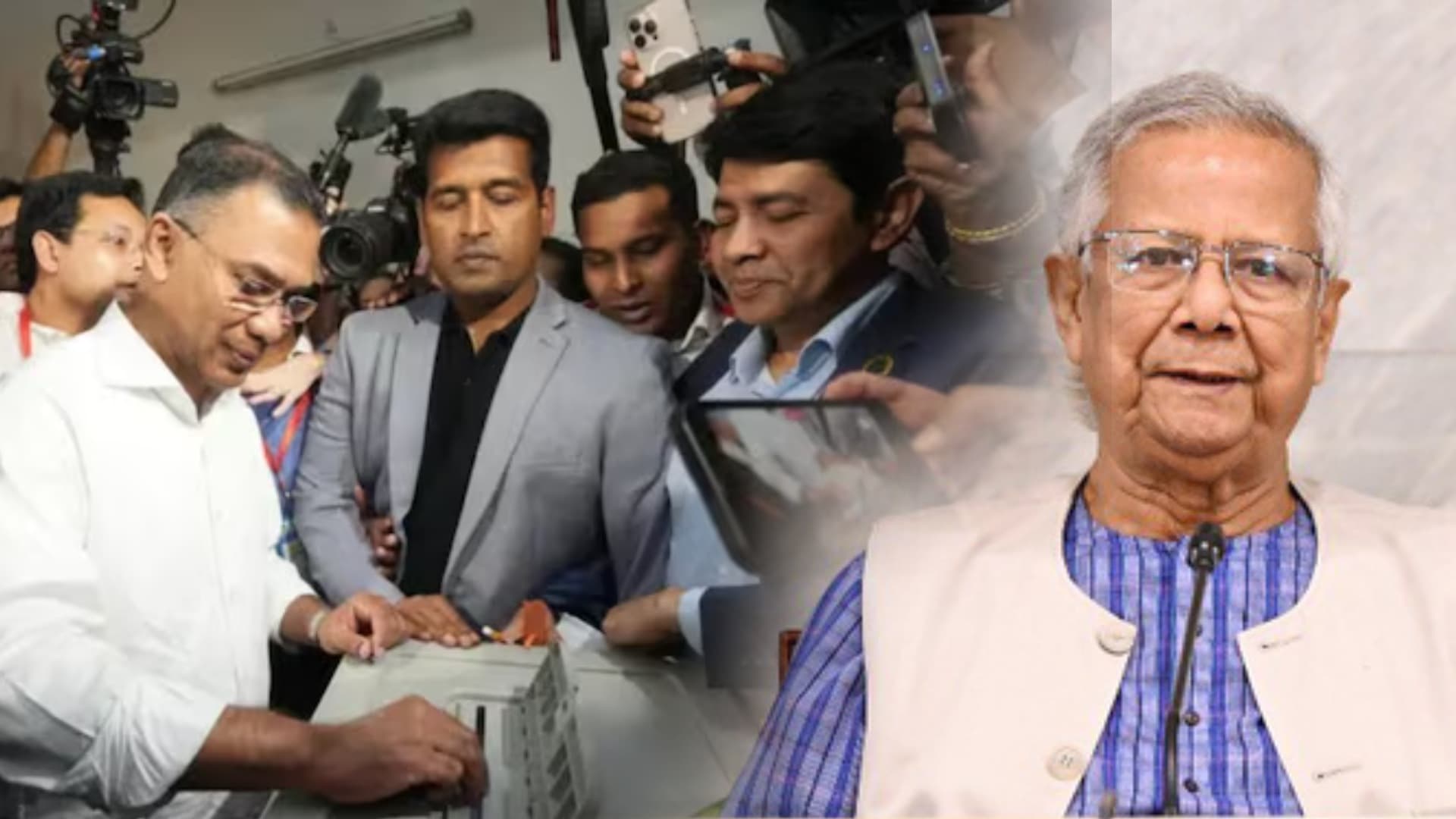
Dhaka, Feb 13: The Bangladesh Nationalist Party (BNP), led by Tarique Rahman, has declared victory after crossing the majority mark in Bangladesh’s 13th national parliamentary election, according to emerging trends as counting continued.
The BNP’s tally moved past the 151-seat threshold required for a simple majority in the 300-member parliament, placing the party in a strong position to form the next government. While counting was still underway in several constituencies, trends indicated limited scope for dramatic changes in the overall outcome.
By around 4 am, Jamaat-e-Islami Bangladesh had reportedly secured 56 seats, falling short of earlier expectations and marking a setback for the party.
The Bangladesh Election Commission (EC) has not yet released the final official results.
The BNP’s tally moved past the 151-seat threshold required for a simple majority in the 300-member parliament, placing the party in a strong position to form the next government. While counting was still underway in several constituencies, trends indicated limited scope for dramatic changes in the overall outcome.
By around 4 am, Jamaat-e-Islami Bangladesh had reportedly secured 56 seats, falling short of earlier expectations and marking a setback for the party.
The Bangladesh Election Commission (EC) has not yet released the final official results.

📱 Get Argus News App
✨📰 60 Word News🎬 Argus Podcast📺 Live TV and Breaking News🔔 Free Notification Alerts
Download Free:
Referendum Trends Signal Support for July Charter
Unofficial results from the national referendum held alongside the parliamentary vote indicated strong backing for the July Charter, a reform document that emerged from the 2024 political uprising and proposes significant constitutional changes.
According to The Daily Star, approximately 72.9 per cent of counted votes supported adopting the charter, while 27.1 per cent opposed it. However, the EC is yet to formally confirm these figures.
Dozens Injured in Poll-Linked Clashes
Although authorities initially described the polling process as largely peaceful, incidents of violence were reported from several areas.
The Daily Star reported that at least 72 people were injured in 14 separate incidents, many occurring near or inside polling stations. Police detained at least nine individuals in connection with the unrest.
The most serious clash was reported from Hatiya in Noakhali district, where 31 people were injured in a confrontation between BNP supporters and members of the National Citizen Party, local media said.
Despite these incidents, authorities reported no fatalities linked to election-related violence.
Unofficial results from the national referendum held alongside the parliamentary vote indicated strong backing for the July Charter, a reform document that emerged from the 2024 political uprising and proposes significant constitutional changes.
According to The Daily Star, approximately 72.9 per cent of counted votes supported adopting the charter, while 27.1 per cent opposed it. However, the EC is yet to formally confirm these figures.
Dozens Injured in Poll-Linked Clashes
Although authorities initially described the polling process as largely peaceful, incidents of violence were reported from several areas.
The Daily Star reported that at least 72 people were injured in 14 separate incidents, many occurring near or inside polling stations. Police detained at least nine individuals in connection with the unrest.
The most serious clash was reported from Hatiya in Noakhali district, where 31 people were injured in a confrontation between BNP supporters and members of the National Citizen Party, local media said.
Despite these incidents, authorities reported no fatalities linked to election-related violence.
Also Read: 'President Absent For Madeleine?' New Epstein Texts Reignite Trump's Former PA Westerhout Controversy
Turnout and Security Measures
Voting began at 7:30 am and continued for nine hours. Voters cast ballots using two separate papers - one for the parliamentary election and another for the referendum - at 42,659 polling stations across the country.
Polling was conducted in 299 of the 300 constituencies. Voting in Sherpur-3 was postponed following the death of a candidate.
According to the Election Commission, nationwide voter turnout stood at 60.69 per cent. Postal ballot participation was reported at 80.11 per cent, and the overall valid vote rate at 70.25 per cent.
Security was significantly tightened, with nearly one million personnel from the armed forces, Border Guard Bangladesh and police deployed nationwide. CCTV cameras were installed at most polling centres, though some booths reportedly lacked cameras inside voting compartments.
Amid the counting process, Jamaat-e-Islami chief Shafiqur Rahman said his party would not pursue “politics of opposition” for its own sake. “We will do positive politics,” he told reporters, signalling acceptance of the emerging outcome.
The election marks the first national vote since the political upheaval of 2024 and the absence of the Awami League from the ballot for the first time in three decades.
Turnout and Security Measures
Voting began at 7:30 am and continued for nine hours. Voters cast ballots using two separate papers - one for the parliamentary election and another for the referendum - at 42,659 polling stations across the country.
Polling was conducted in 299 of the 300 constituencies. Voting in Sherpur-3 was postponed following the death of a candidate.
According to the Election Commission, nationwide voter turnout stood at 60.69 per cent. Postal ballot participation was reported at 80.11 per cent, and the overall valid vote rate at 70.25 per cent.
Security was significantly tightened, with nearly one million personnel from the armed forces, Border Guard Bangladesh and police deployed nationwide. CCTV cameras were installed at most polling centres, though some booths reportedly lacked cameras inside voting compartments.
Amid the counting process, Jamaat-e-Islami chief Shafiqur Rahman said his party would not pursue “politics of opposition” for its own sake. “We will do positive politics,” he told reporters, signalling acceptance of the emerging outcome.
The election marks the first national vote since the political upheaval of 2024 and the absence of the Awami League from the ballot for the first time in three decades.
Related Topics
Explore more stories