



Geopolitics / Bangladesh Media Takes Aim at Govt. over US Trade Deal, Says Dhaka Cedes More than It Gains
Key Points
- Bangladesh’s interim government signed a reciprocal trade deal with the US, securing a marginal tariff cut but committing to billions in purchases.
- The agreement includes defence, energy, and digital infrastructure clauses, raising concerns about strained ties with China.
- Experts warn of heavy obligations on Bangladesh, including $3.5 billion in farm imports and 14 Boeing aircraft purchases.
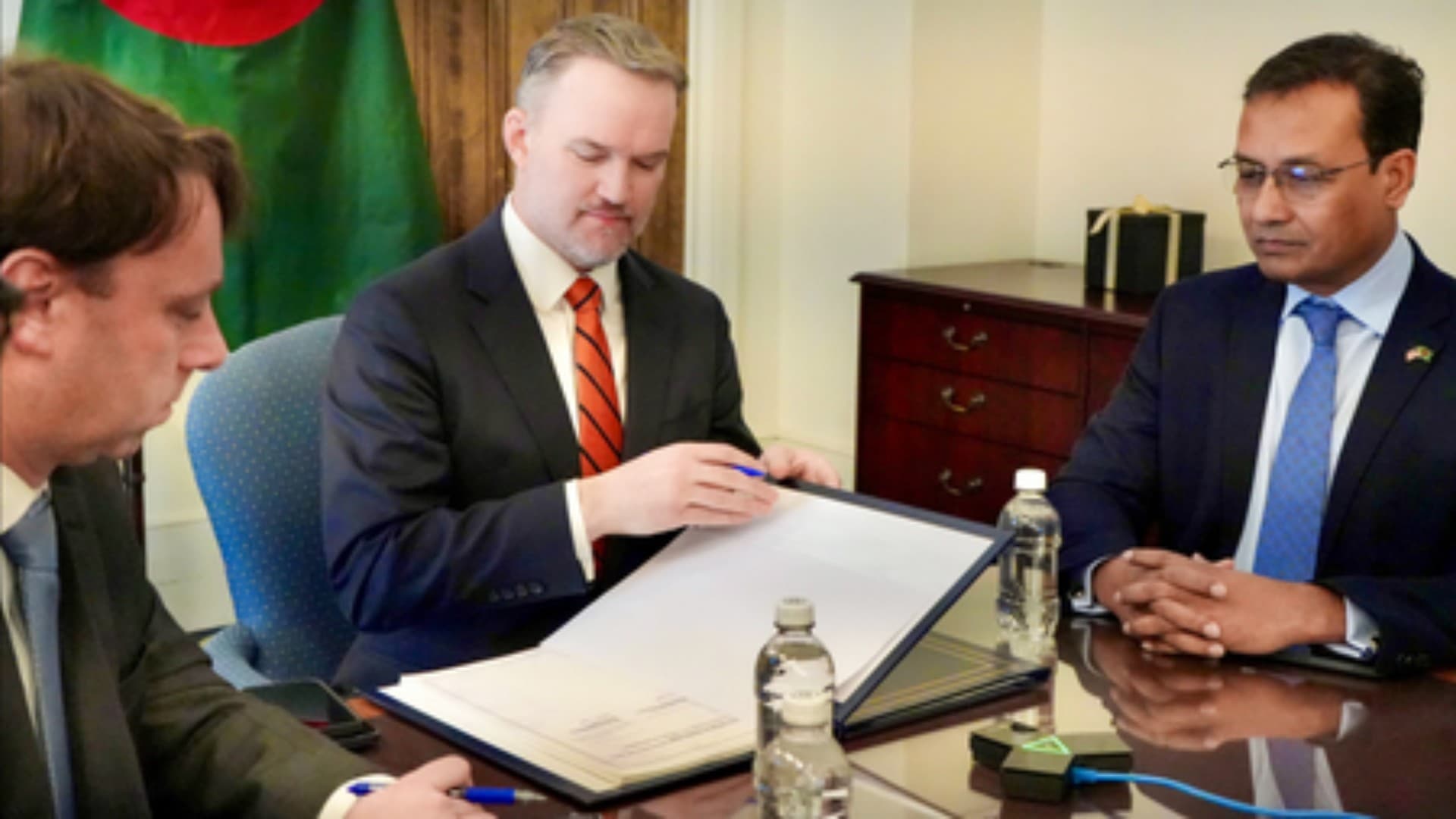
New Delhi, Feb 11: The recently announced reciprocal trade deal with the United States does ensure Dhaka a “marginal” duty cut to 19 per cent, but comes “at a steep cost”, including a commitment “to billions of dollars in purchases”, according to an analysis in Bangladesh media.
“Bangladesh’s interim government has signed a sweeping trade agreement with the United States at the twilight of its tenure to secure a partial tariff relief, but the deal comes with significant geopolitical strings attached,” reported The Daily Star on Wednesday.

📱 Get Argus News App
✨“The Agreement on Reciprocal Trade, signed on February 9,
goes far beyond standard tariff reductions. Instead, it creates a binding
framework that integrates Bangladesh’s defence, energy, trade and digital
infrastructure into the US sphere of influence,” it added.
Also read: US Lifts 25% Tariff on India over Russian Oil Imports
The report pointed out certain clauses in the agreement that may upset Dhaka’s current ties with Beijing, where China has lately been seen extending its footprints in Bangladesh since the fall of the Awami League government.
This includes trade, infrastructure development, and even military outreach, according to available reports.
Wednesday’s report also pointed out that the US agreement mandates that Bangladesh “shall endeavour to increase purchases of US military equipment” while simultaneously limiting procurement from “certain countries”.
It referred to the mention of “certain countries” as a “thinly veiled reference to Chinese suppliers”.
According to The Daily Star, under Article 4.3 of the trade agreement, if Bangladesh enters into a free trade or preferential economic agreement with a “non-market country” – which it termed a “US regulatory term used for China and Russia” – Washington “can terminate the entire deal and reimpose punitive tariffs”.
The US, said the report, has also committed to working with Bangladesh to “streamline and enhance defence trade”.
It also quoted an expert, identified as Mustafizur Rahman, a distinguished fellow at the Centre for Policy Dialogue (CPD), who viewed the agreement as “imposed unjustly” through “the total weaponisation of trade”.
The report sought to know why the Muhammad Yunus-led interim administration had “to rush to sign an agreement that the elected government will have to implement”, with general election slated for Thursday.
Claiming that Bangladesh must offer zero duty on a number of US items and slash duties on certain other goods over five and 10 years, beginning with a 50 per cent cut from the date the agreement comes into force, he stressed “significant revenue implications”.
Another expert it spoke to, Selim Raihan, executive director of the South Asian Network on Economic Modeling, argued that the agreement is “heavily skewed”, imposing a far longer list of obligations on Bangladesh than on the US, “which raises serious questions about whether the minimal tariff relief is truly worth the price”.
Also Read: Aircraft Parts to Red Sorghum: Here are Key Terms of India-US Interim Trade Pact
The report further added that Biman Bangladesh Airlines, the state carrier, will purchase 14 Boeing aircraft, “steering the country’s aviation sector away from European competitor Airbus”.
Meanwhile, in the agricultural sector, Dhaka will import at least $3.5 billion worth of American farm products, including wheat and soyabean, it pointed out.
The US-Bangladesh joint statement mentions “recent and forthcoming commercial deals in the areas of agriculture, energy, and technology”, including procurement of aircraft; purchases of approximately $3.5 billion of American agriculture products, including wheat, soy, cotton, and corn; purchases of energy products, with an estimated value of $15 billion over 15 years.
“By agreeing to these purchase quotas, Bangladesh is effectively streamlining the entry of US agricultural commodities, removing the procedural delays that previously hampered these imports,” concluded the report.
(IANS)
Related Topics
Explore more stories