



Odia Culture / Kaliyadalana Ekadashi: Know Its Significance In Jagannath Tradition
·3 hours ago·3 min read
Key Points
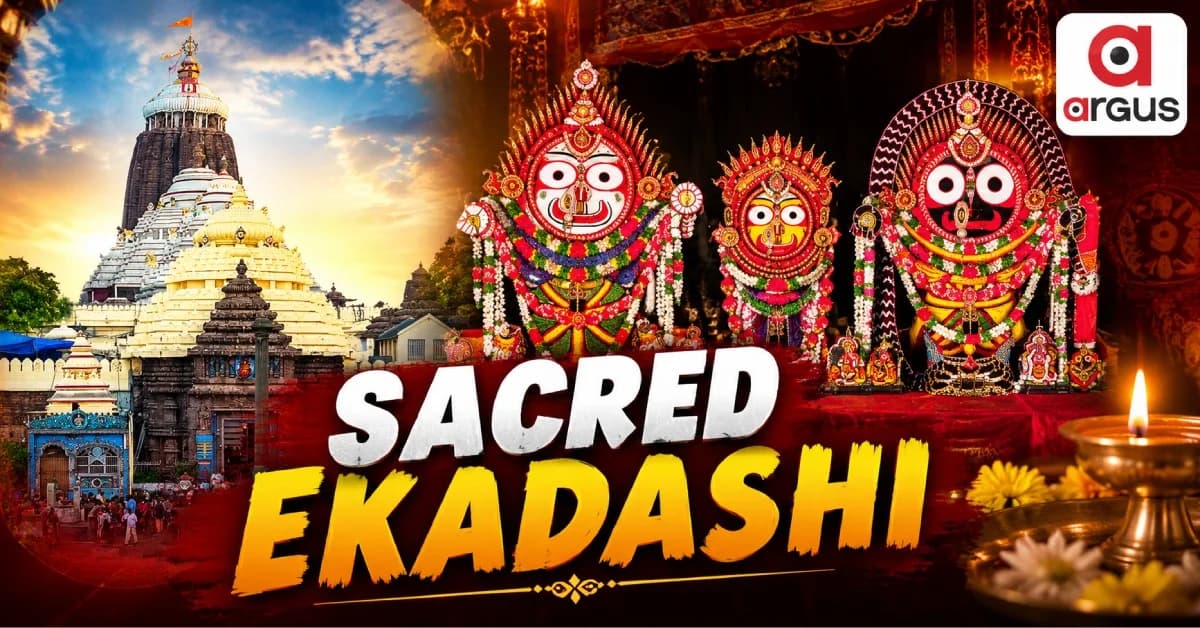
Kaliyadalana Ekadashi, also known as Aja Ekadashi and Annada Ekadashi, is being observed at Srimandir with Lord Jagannath adorned in the Kaliyadalana Besha.
Puri, Sep 7: Kaliyadalana Ekadashi, observed on the Krishna Paksha Ekadashi of the month of Bhadrapada, holds special significance in the Jagannath tradition. The day is also known as 'Aja Ekadashi' and 'Annada Ekadashi'.
This year, as the Ekadashi falls on a Monday, it is also regarded as 'Shambhu Ekadashi'.
According to the rules prescribed in Hindu religious scriptures, the observance of an Ekadashi fast spans three days. While the principal fast is observed on Ekadashi, the associated rituals begin on Dashami and conclude with the breaking of the fast, or parana, on Dwadashi.
Also Read: Ganesh Puja Preparations Gather Pace In Kataka As Artisans Work Round The Clock
Three-Day Ekadashi Observance
The first day, Dashami, is marked by restraint. Devotees observing the fast traditionally consume a single sattvic meal at midday, so that no food remains in the stomach on the following day. Complete fasting or restraint is maintained at night.
This year, as the Ekadashi falls on a Monday, it is also regarded as 'Shambhu Ekadashi'.
According to the rules prescribed in Hindu religious scriptures, the observance of an Ekadashi fast spans three days. While the principal fast is observed on Ekadashi, the associated rituals begin on Dashami and conclude with the breaking of the fast, or parana, on Dwadashi.
Also Read: Ganesh Puja Preparations Gather Pace In Kataka As Artisans Work Round The Clock
Three-Day Ekadashi Observance
The first day, Dashami, is marked by restraint. Devotees observing the fast traditionally consume a single sattvic meal at midday, so that no food remains in the stomach on the following day. Complete fasting or restraint is maintained at night.

📱 Get Argus News App
✨📰 60 Word News🎬 Argus Podcast📺 Live TV and Breaking News🔔 Free Notification Alerts
Download Free:
The second day, Ekadashi, is the principal fasting day. The observance concludes on Dwadashi with 'parana', when the fast is formally broken.
Kaliyadalana Ekadashi has a special place in Srimandir, where Lord Jagannath is adorned in the Kaliyadalana Besha on the occasion.
The Significance Of Aja Ekadashi
Religious tradition associates 'Kaliyadalana Ekadashi' with the destruction of sins and spiritual liberation. According to the account narrated by Madhusudana to Yudhishthira, a person who worships Lord Hrishikesha on this day can attain Vaikuntha.
The mahatmya of Annada Ekadashi is also associated with the story of King Harishchandra.
In ancient times, King Harishchandra, described as a Chakravarti king, gave all his wealth and kingdom to Sage Vishwamitra. To provide the required dakshina, he even sold his family. Eventually, he became a slave of a 'Chandala' and earned his livelihood by accepting the clothes of the dead.
Despite his severe hardships, Harishchandra remained committed to truth and never deviated from it. He remained deeply troubled, wondering what he could do, where he could go and how he could find deliverance.
Kaliyadalana Ekadashi has a special place in Srimandir, where Lord Jagannath is adorned in the Kaliyadalana Besha on the occasion.
The Significance Of Aja Ekadashi
Religious tradition associates 'Kaliyadalana Ekadashi' with the destruction of sins and spiritual liberation. According to the account narrated by Madhusudana to Yudhishthira, a person who worships Lord Hrishikesha on this day can attain Vaikuntha.
The mahatmya of Annada Ekadashi is also associated with the story of King Harishchandra.
In ancient times, King Harishchandra, described as a Chakravarti king, gave all his wealth and kingdom to Sage Vishwamitra. To provide the required dakshina, he even sold his family. Eventually, he became a slave of a 'Chandala' and earned his livelihood by accepting the clothes of the dead.
Despite his severe hardships, Harishchandra remained committed to truth and never deviated from it. He remained deeply troubled, wondering what he could do, where he could go and how he could find deliverance.
After several years had passed, Sage Gautama arrived while the king was sitting in distress near the seashore. Harishchandra offered his respects and narrated his suffering to the sage.
Gautama advised him to observe Annada Ekadashi. The sage told him that properly observing the fast during the Krishna Paksha of Bhadrapada would destroy all his sins. After giving this advice, Gautama disappeared.
Following the sage's instructions, Harishchandra observed the fast. According to the religious account, all his sins were destroyed, and he regained his wealth, kingdom, wife and son. He eventually attained liberation from all sins and proceeded to heaven.
Kaliyadalana Besha At Srimandir
It is in connection with this religious significance that the Kaliyadalana Besha of Mahaprabhu is observed at Srimandir.
There is a belief that devotees receive spiritual merit by having darshan of Mahaprabhu in the Kaliyadalana Besha.
Jagannath culture researcher Padmanabha Tripathi Sharma said that in Puri, the deities of Lord Rama-Krushna and Lord Madanamohana are taken out of the Jagannath Temple to Labanikhia Mandap on Loknath Temple Road. The women of the Mahabhoi servitor community worship the deities there.
Gautama advised him to observe Annada Ekadashi. The sage told him that properly observing the fast during the Krishna Paksha of Bhadrapada would destroy all his sins. After giving this advice, Gautama disappeared.
Following the sage's instructions, Harishchandra observed the fast. According to the religious account, all his sins were destroyed, and he regained his wealth, kingdom, wife and son. He eventually attained liberation from all sins and proceeded to heaven.
Kaliyadalana Besha At Srimandir
It is in connection with this religious significance that the Kaliyadalana Besha of Mahaprabhu is observed at Srimandir.
There is a belief that devotees receive spiritual merit by having darshan of Mahaprabhu in the Kaliyadalana Besha.
Jagannath culture researcher Padmanabha Tripathi Sharma said that in Puri, the deities of Lord Rama-Krushna and Lord Madanamohana are taken out of the Jagannath Temple to Labanikhia Mandap on Loknath Temple Road. The women of the Mahabhoi servitor community worship the deities there.
Related Topics
Explore more stories